Objective monitoring between visits.
Polarity turns the phone and wearable data people already have into a clear record of the weeks between psychiatric appointments.
Get in touch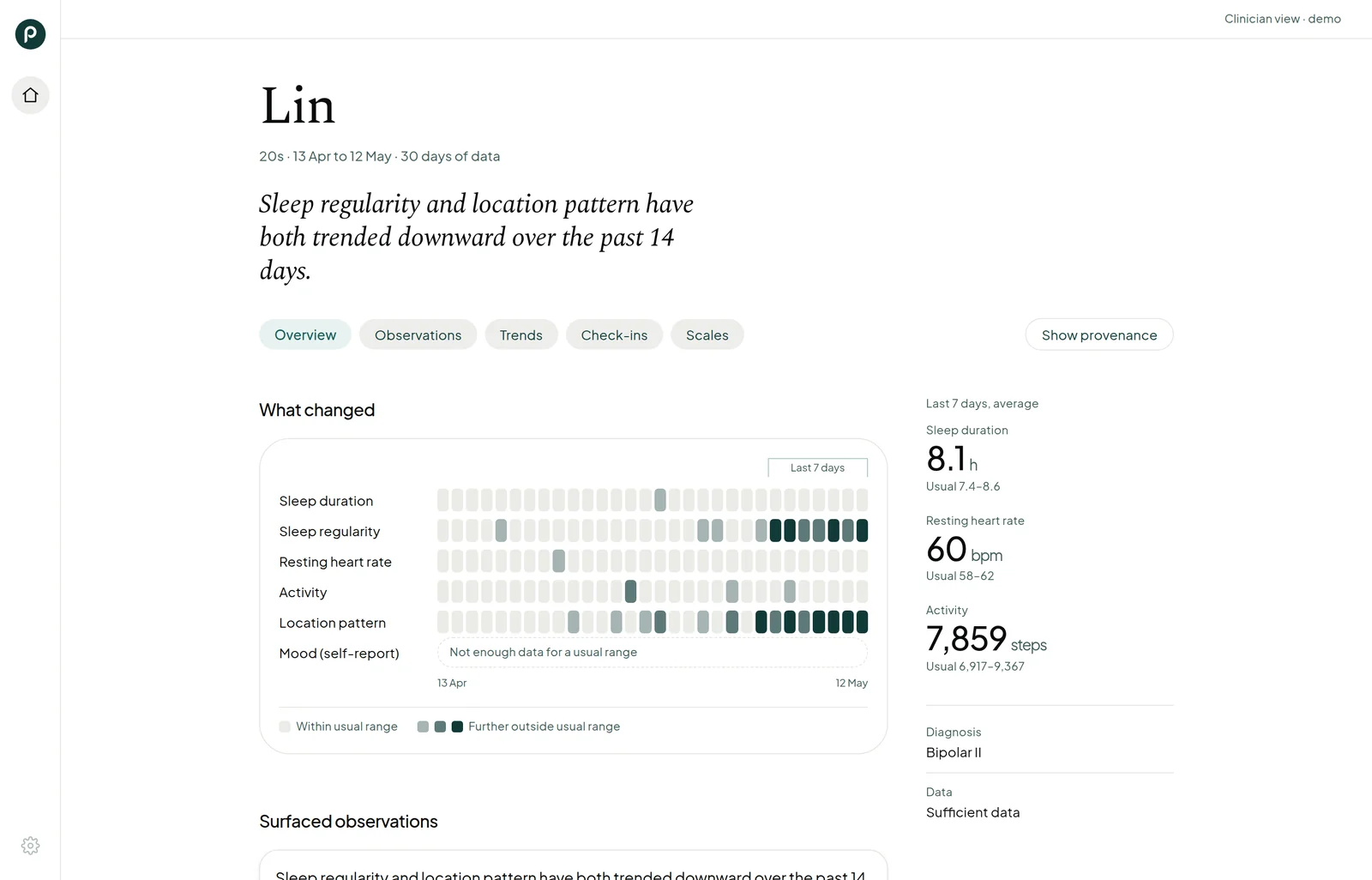
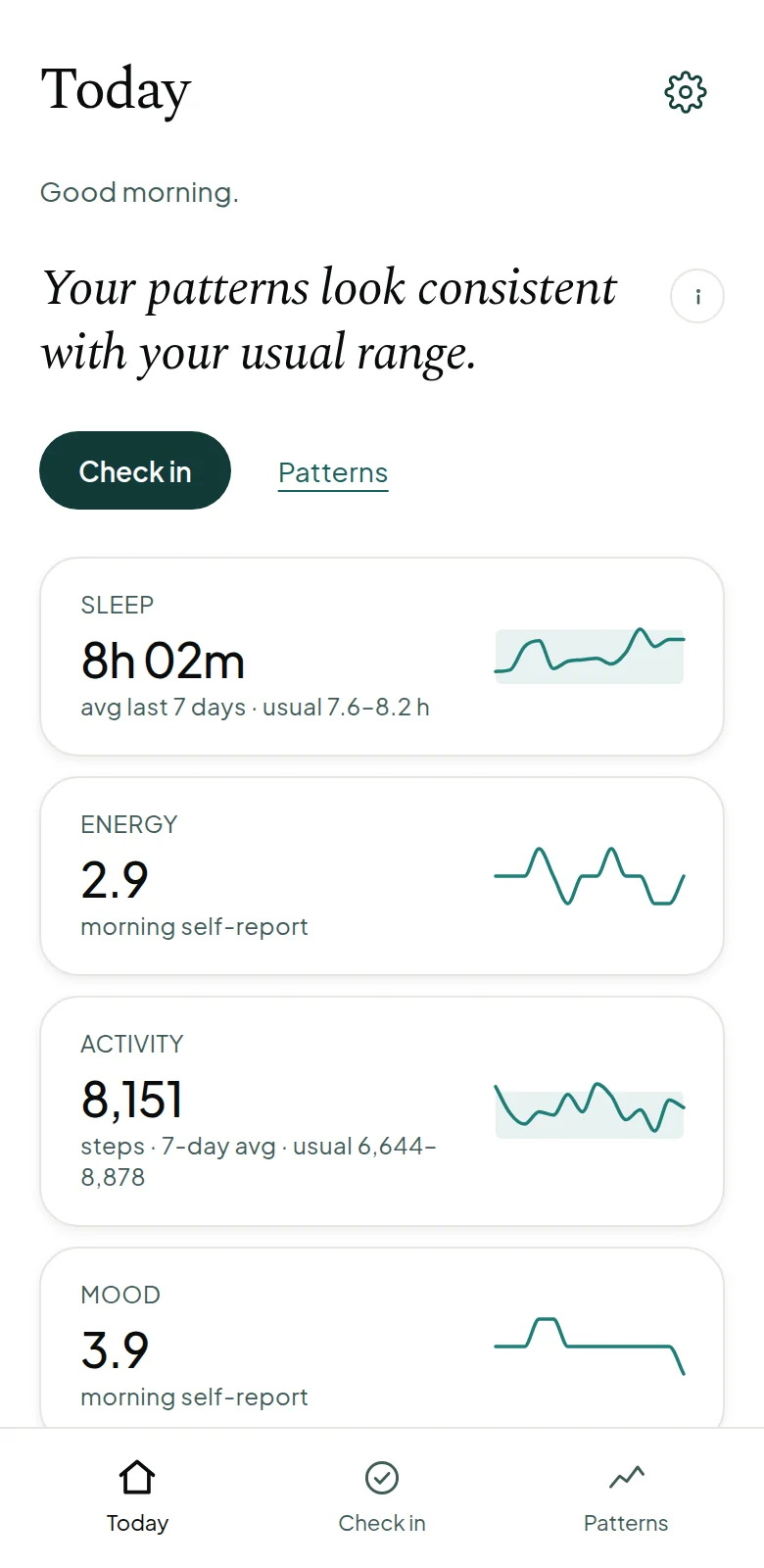
Screens from the Polarity prototype, with example data.
Polarity turns the phone and wearable data people already have into a clear record of the weeks between psychiatric appointments.
Get in touchScreens from the Polarity prototype, with example data.
A visit captures one day. Polarity shows the weeks in between.

Start each visit with an overview of the weeks since the last one, and see changes as they build up. For clinics in the Nordics and Germany.
Read more → For trialsDaily measures between study visits, as change from each participant's baseline, delivered as a documented dataset.
Read more →Polarity starts with the signals most consistently linked to changes in mood disorders.
60%
of people treated for depression in specialist mental healthcare have a new episode within five years.
Hardeveld et al., Acta Psychiatr Scand 2010 · systematic review77%
Disturbed sleep is the most consistent early sign of mania, reported in a median of 77% of cases across studies.
Jackson, Cavanagh & Scott, J Affect Disord 2003 · 17 studies, 1,191 people20+ days
The typical length of the early phase before mania, reported consistently across studies. Long enough to show up in data collected between visits.
Jackson, Cavanagh & Scott, J Affect Disord 2003Polarity is being developed as medical device software under EU MDR. A quality system for clinical trials and medical device software is being established ahead of CE marking.

Open role
Bring psychiatry into the 21st century. We're looking for an experienced regulated software engineer.
Get in touchSupported and recognised by


